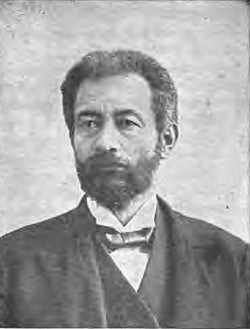
Dr. William Henry Fitzbutler
WF

Dr. William Henry Fitzbutler, circa 1890s

1842 1901
Our Founding Legacy

Dr. William Henry Fitzbutler

Physician, Educator, Civil Rights Activist, and Founder of Louisville National Medical College

Born into the shadow of American slavery and raised in the freedom of Canada, Dr. Fitzbutler became Louisville's first formally trained Black physician — and built the institution that would train 175 more.

His vision for equitable medical education and his relentless advocacy laid the foundation for what would become Falls City Medical Society.

First Black physician in Louisville First Black graduate, Detroit Medical College Founder, Louisville National Medical College Publisher, Ohio Falls Express

From Slavery to Freedom

William Henry Fitzbutler was born on December 22, 1842, in Virginia. His father was an enslaved coachman and his mother an indentured servant from England. Terrified for their son's future, his parents made the perilous journey north via the Underground Railroad, settling in Amherstburg in Essex County, Ontario, Canada — a community known as a refuge for those seeking freedom.

In Canada, the young Fitzbutler received the education that would have been impossible in the antebellum South. He showed exceptional scholarship from an early age and developed a deep interest in medicine, reading extensively from the library of Dr. Daniel Pearson, a formerly enslaved physician with a thriving Canadian practice. Fitzbutler apprenticed under Dr. Pearson — his first formal step toward the medical profession.

In 1864, he entered Adrian College in Michigan for preparatory coursework. Two years later, he married Sarah Helen McCurdy, the daughter of a prominent Essex County livestock farmer. After graduating from Adrian College in 1868, Fitzbutler enrolled at Detroit Medical College, where he became the first African American to earn a medical degree from the institution in 1872.

Arriving in a City That Needed Him

In July of 1872, Dr. Fitzbutler arrived in Louisville and became the first formally trained African American physician to establish a medical practice in Kentucky. At the time, Louisville's Black population of 18,000 had no formally trained physician of their own. His practice thrived, providing critical care to communities that the segregated healthcare system had abandoned.

But Fitzbutler's ambitions extended far beyond his own practice. He became a civil rights activist, frequently lobbying the Kentucky legislature on issues of equality and access. He also founded, edited, and published the Ohio Falls Express, a newspaper focused on the African American community — using the press as a tool for advocacy and organizing.

"He and his wife became influential and effective community forces for progress, education, human rights, and medical care for all." University of Louisville School of Medicine — Fitzbutler College

Building a Medical School From Nothing

Recognizing that none of Louisville's four existing medical schools would accept Black students, Dr. Fitzbutler took action. In 1888, he secured a charter from the Kentucky Legislature to organize the Louisville National Medical College — a medical school that would accept African Americans.

Serving as Dean, Chair of Surgery, and majority owner, Fitzbutler led the institution with a vision of expanding opportunity and excellence in medical training. The college became the finest African American medical school in the United States — and the only one entirely owned and operated by African Americans.

Alongside the college, Fitzbutler established Louisville Hospital in 1894, housed in two buildings neighboring the school, providing both clinical training for students and direct care to the community. Over its 24-year history, the Louisville National Medical College graduated 175 physicians — many of whom went on to serve communities across the country that otherwise lacked access to care.

When Abraham Flexner conducted his historic 1909 inspection of medical schools, he found the college's hospital to be among the cleanest and best run in the country. Tragically, the curricular reforms mandated in response to the Flexner Report led to the closure of many medical schools — disproportionately those serving minority populations. The Louisville National Medical College closed in 1912.
A Life of Firsts

1842

Born December 22 in Virginia to an enslaved father and an indentured mother from England.

1840s

Parents flee to Canada via the Underground Railroad; family settles in Amherstburg, Ontario.

1864

Enters Adrian College in Michigan after apprenticing under Dr. Daniel Pearson.

1866

Marries Sarah Helen McCurdy, who would later become the first Black woman to earn a medical degree in Kentucky.

1872

Graduates from Detroit Medical College as the first Black graduate; moves to Louisville and becomes Kentucky's first formally trained Black physician.

1888

Secures charter from Kentucky Legislature and founds Louisville National Medical College — the only Black-owned and operated medical school in America.

1894

Establishes Louisville Hospital alongside the medical college for clinical training and community care.

1895

The National Medical Association is founded nationally, in part due to the exclusion of Black physicians from the AMA.

1899

Louisville hosts the NMA's third annual convention; the Falls City medical community begins to formally organize.

1901

Dr. Fitzbutler dies in Louisville on December 28 at the age of 59 from bronchitis; survived by wife Sarah and six children.

1902

Falls City Medical Society is chartered — a direct outgrowth of the medical community Fitzbutler built.

The Fitzbutler Family

Dr. Fitzbutler's legacy extended well beyond his own lifetime. His family carried forward his commitment to healthcare and education across generations.

Wife & Partner

Dr. Sarah Helen McCurdy Fitzbutler

Enrolled at Louisville National Medical College and became the first African American woman to receive a medical degree in Kentucky. After Henry's death in 1901, she continued leadership of the college and hospital until their 1912 closure. She also became Superintendent of Nurses and spent her later years providing enormous amounts of charity care in West Louisville.

Daughter

Dr. Mary Fitzbutler Waring

One of the Fitzbutlers' six children, Mary followed her parents into medicine and continued the family's dedication to the healing professions. Three of their five surviving children pursued careers in nursing.

Recognition Today

Dr. Fitzbutler's contributions to medicine and civil rights continue to be honored by institutions across Louisville and beyond.

Fitzbutler College

UofL School of Medicine named an advisory college in his honor.

Fitzbutler House

University of Michigan Medical School named a residential house in his honor.

Norton Monument

In 2024, Norton West Louisville Hospital unveiled a monument honoring Dr. Fitzbutler and early Black medical professionals.

From Fitzbutler to Falls City

In 1899, Louisville hosted the third annual convention of the National Medical Association. That gathering proved to be a catalyst for organized Black medical leadership in Kentucky. Following the meeting, the Medical Society of Negro Physicians, Pharmacists, and Dentists of Kentucky was formed. Three years later, Falls City Medical Society was chartered.

From its inception, FCMS served as a vital forum for the exchange of ideas, the distillation of collective thought, and the establishment of goals for the African American medical community. One of its first achievements was the creation of the Red Cross Hospital, which faithfully served Louisville's Black community from 1907 to 1976.

Today, Falls City Medical Society — aligned with the mission of the National Medical Association — continues the legacy that Dr. Fitzbutler set in motion. His vision of equitable medical education, community-focused care, and the courage to build institutions where none existed remains the cornerstone of everything FCMS does.

Sources & Further Reading

  • University of Louisville School of Medicine, "Fitzbutler College" — louisville.edu/medicine
  • BlackPast.org, "Henry Fitzbutler (1842–1901)"
  • Wikipedia, "Louisville National Medical College"
  • Kentucky Historic Institutions, "Louisville National College of Medicine"
  • WHAS11, "New monument honors Louisville's Black medical professionals" (October 2024)
  • National Medical Association, History — nmanet.org
  • Flexner Report, Carnegie Foundation for the Advancement of Teaching (1910)
  • Filson Historical Society, Louisville — Morris Weiss Research Collection on Black Medical History
  • Savitt TL, Race and Medicine in Nineteenth- and Early-Twentieth-Century America, Kent State University Press, 2007
  • Byrd WM, Clayton LA, An American Health Dilemma, Routledge, 2000

Join Falls City Medical Society

Dr. Fitzbutler built the foundation. We carry it forward. Join the society he made possible.

Become a Member