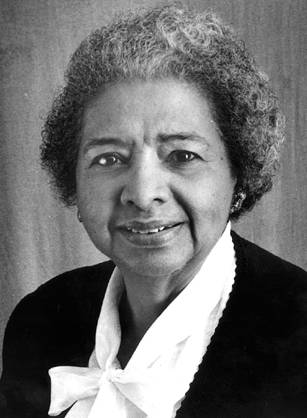
Dr. Grace Marilynn James
Dr. Grace Marilynn James
Pediatrician, Educator, Activist, and First Black Woman on Faculty at the University of Louisville School of Medicine
For 37 years, Dr. Grace James treated Louisville's most vulnerable children, fought racism and sexism in medicine, and built the institutions that West Louisville needed. She saw over 100 patients a week — and when they couldn't pay, she gave them food, clothing, and toys alongside their care.
From Charleston to Medicine
Grace Marilynn James was born on August 12, 1923, in Charleston, West Virginia, the middle of seven children. Her father Edward owned a produce company; her mother Stella was a homemaker. Grace knew she wanted to pursue medicine by high school, but her parents worried they couldn't afford medical school.
She majored in biology at West Virginia State College and did coursework in social work. A fellowship from the National Tuberculosis Association brought her to New York City's Henry Street Settlement House, where seeing the healthcare needs of the extremely poor deepened her resolve. After graduating, her first job was as a secretary earning $25 per week — but a trip to a National Medical Association meeting in St. Louis changed everything. Seeing Black physicians there, she made a decision: she would become one of them.
She enrolled at Meharry Medical College in Nashville, graduating with her MD in 1950. She then completed an internship and pediatric residency at Harlem Hospital in New York City before moving to Louisville in 1953.
A Doctor Who Fought
Dr. James arrived in Louisville when city hospitals were still legally segregated. She opened a private pediatrics practice and a walk-in clinic serving the impoverished West End — the community she would dedicate the rest of her life to. She saw over 100 patients a week, often giving her poorest patients food, clothing, and toys alongside their medical care.
She was the first African American woman on the staff of Louisville Children's Hospital and one of only two Black women on the faculty of a southern medical school. She eventually became affiliated with eight Louisville-area hospitals. But the barriers she faced were constant.
"I will make noises if my patients are mistreated. I will scream at people if that's what it takes. There are people who will discredit you because of your skin color." Dr. Grace James — Courier-Journal, 1980
Male doctors — both white and Black — questioned her credentials and dismissed her advocacy. She described the obstacles facing Black women in medicine as "triple jeopardy" — racism, capitalism, and sexism working together to prevent Black women from pursuing or completing their studies.
Beyond the Exam Room
Dr. James was outspoken long before others on Black infant mortality and the health disparities facing Louisville's Black community. She gave public lectures denouncing racism and sexism in medicine and pushed for a universal healthcare system.
In the 1970s, she headed the Council on Urban Education, working to improve educational outcomes for Black children. She founded the Teen Awareness Project to reduce teenage birth rates among African American girls. She established the West Louisville Health Education Program and the West Louisville Medical Center.
In 1983, she gathered the sixteen Black female physicians she had counted in Louisville for a fellowship meeting — recognizing that even decades into her career, they were still a rare and underserved community themselves. She helped plan workshops to bring these women together for mutual support.
She Opened Eyes and Changed Things
When Dr. Grace James died on January 24, 1989, Shelby Lanier, president of the Louisville NAACP, said she had "opened the eyes of people and caused things to change." Laken Cosby Jr., civil rights leader and former school board chairman, called her "not only an outstanding physician, but an outstanding social achiever for the poor."
Today, Grace James Academy of Excellence — one of FCMS's current partner schools — bears her name. The University of Louisville named the Fitzbutler-James Pointe residence hall in her honor. Her papers are preserved in the University of Louisville Archives. And her example continues to inspire every FCMS member who serves West Louisville.
A Life of Impact
Born August 12 in Charleston, West Virginia.
Graduates from Meharry Medical College with MD.
Moves to Louisville; opens pediatric practice and West End walk-in clinic in a segregated city.
Becomes first Black woman on faculty at UofL School of Medicine and first Black woman in Jefferson County Medical Society.
Heads Council on Urban Education; establishes West Louisville Health Education Program.
Gathers Louisville's 16 Black female physicians for fellowship — recognizing their rarity and need for community.
Dies January 24; NAACP leader calls her a woman who "opened the eyes of people and caused things to change."
Advance Health Equity in West Louisville
Dr. James spent 37 years fighting for the health of Louisville's most vulnerable. Join the mission she championed.
Join FCMS