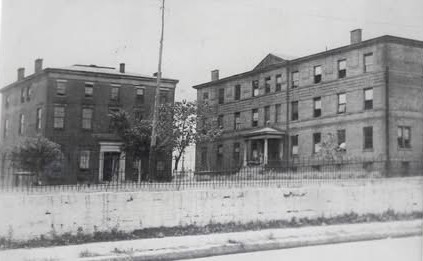
State University / Simmons College of Kentucky
State University & Simmons
Kentucky's Oldest African American College — Home to the Medical Department That Trained Louisville's First Black Physicians
Founded in 1879 by the Convention of Colored Baptist Churches in Kentucky, State University became the only African American institution in the state with the power to grant professional degrees in theology, medicine, and law. Its medical department — affiliated with the Louisville National Medical College — produced the physicians who built Falls City Medical Society and transformed Black healthcare in Louisville.
A School Born from Emancipation
In August 1865 — just months after the end of the Civil War — twelve Black Baptist churches met at Fifth Street Baptist Church in Louisville and organized the State Convention of Colored Baptist Churches in Kentucky. Because there was no place in Kentucky for Black residents to obtain a college education, members of the Convention began discussing the need to create a school for the training of African Americans, many of whom were one generation removed from slavery.
After considering Frankfort as a location, the Convention chose Louisville. On November 25, 1879, the Kentucky Normal and Theological Institute opened its doors at 7th and Kentucky Streets under the direction of its first president, Rev. Elijah P. Marrs. The school began with a focus on theological training and teacher preparation — the two most urgent needs of a community building itself from the ground up.
From Institute to University
After Rev. Marrs's brief one-year tenure, Dr. William J. Simmons assumed the presidency. Simmons was a formerly enslaved man who had developed Howard University's teacher training programs — and he would transform the Louisville school into something far more ambitious.
Under Simmons's ten-year leadership, from 1880 to 1890, the school expanded from a theological institute into a comprehensive university, adding liberal arts, college preparatory courses, business, music, industrial training, and professional departments. The institution was rechristened State University in 1881 and chartered as a university in 1884. By 1893, it had 159 students.
In 1894, State University's amended charter made it the only African American educational institution in Kentucky with the power to grant professional degrees in theology, medicine, and law. With the affiliation of the Louisville National Medical College in 1888 and Central Law School in 1890, it became the only Black institution in the nation, other than Howard University, with both medical and law departments.
"Most African Americans in Kentucky who were physicians, teachers, ministers, and lawyers before 1920 had attended the University." Simmons College of Kentucky institutional history
Where Medicine Met Mission
The Louisville National Medical College, founded by Dr. William Henry Fitzbutler in 1888, operated as the medical department of State University. This affiliation was formalized in 1907 when the two institutions merged. The medical college was the engine that produced Louisville's Black physician workforce, graduating 175 doctors over its 24-year existence.
Dr. Artishia Garcia Gilbert Wilkerson earned her Bachelor of Arts and Master of Arts degrees from State University before entering the medical college, exemplifying the pipeline the institution created: liberal arts education flowing into professional training. Other graduates similarly moved through State University's academic programs before entering medicine, law, or ministry.
The medical college's closure in 1912, following the Flexner Report, was a devastating blow not just to the college but to the entire university's mission of comprehensive professional education for Black Kentuckians.
Depression, Foreclosure, Reinvention
In 1918, the institution was renamed Simmons University in honor of Dr. William J. Simmons, the transformative second president who had died in 1890. Under President L. Charles Parrish, the university improved its endowment and academic offerings, and by 1922 the campus served slightly over 500 students.
But the Great Depression was merciless. In 1930, the university lost control of its buildings when its mortgage was foreclosed. The University of Louisville purchased the bulk of the property and established Louisville Municipal College — a segregated colored branch of UofL — on the former Simmons campus. Simmons was forced to agree to offer only religious instruction and relocated to a smaller facility at 18th and Dumesnil.
The loss was immense. The institution that had been the intellectual center of Black Louisville, producing its doctors, lawyers, teachers, and ministers, was reduced to a Bible college, stripped of its campus and its comprehensive mission by the twin forces of economic collapse and institutional racism.
Coming Home
The institution survived. In 1982, it was renamed Simmons Bible College to reflect its reduced scope. But the spirit of Dr. William J. Simmons's expansive vision never died.
In 2005, Dr. Kevin W. Cosby became the 13th president and renamed the school Simmons College of Kentucky, reinstating its founding mission of general education alongside religious instruction. In 2006 — seventy-six years after losing its campus — the college purchased and moved back to its original location at 7th and Kentucky Streets.
Today, Simmons College of Kentucky is the nation's 107th HBCU. In fall 2025, it enrolled a record freshman class of 210 students — more than tripling the prior year's number. A $32 million STEAM-focused Westover Campus in Louisville's Chickasaw neighborhood is planned to open in 2028. In May 2025, the University of Louisville returned the college's institutional archives after 51 years of custodianship — bringing the historical record home at last.
The Circle Closes
Perhaps the most symbolically powerful chapter in Simmons's resurgence is the return of medical education to the institution. More than a century after the Louisville National Medical College closed in 1912, Simmons has launched a Master of Science in Medical Sciences program in partnership with Ponce Health Sciences University, an LCME-accredited medical school with campuses in Puerto Rico and St. Louis.
The 42-credit, 11-month program mirrors the first year of medical school, covering anatomy, biochemistry, histology, microbiology, neuroscience, and physiology. It is designed to prepare students for entry into MD programs and other health professions — and the top 20 percent of graduates are guaranteed a medical school interview with Ponce Health Sciences University.
MSMS students at Simmons study inside the new Norton Healthcare hospital facility, working alongside MD students and physicians with industry-standard tools and training. The program reports that 68 percent of graduates advance to medical school, 77 percent to professional health school, and 100 percent pass their USMLE Step 1 board exam.
For Simmons — a historically Black college that once trained physicians on this same Louisville ground through its affiliation with Fitzbutler's medical college — the MSMS program is not just a new degree. It is a restoration. The institution that was stripped of its medical department by the Flexner Report, stripped of its campus by the Depression, and stripped of its comprehensive mission by segregation is now training the next generation of physicians again. Dr. Fitzbutler's vision, interrupted for over a century, is being fulfilled.
From 1879 to Today
Twelve Black Baptist churches organize the State Convention of Colored Baptist Churches in Kentucky, planting the seed for the school.
Kentucky Normal and Theological Institute opens at 7th and Kentucky Streets in Louisville under Rev. Elijah P. Marrs.
Dr. William J. Simmons becomes president and transforms the school into a comprehensive university over the next decade.
Louisville National Medical College is founded by Dr. William Henry Fitzbutler and affiliates with the university.
Central Law School affiliates with the institution, giving the university departments in theology, medicine, and law.
An amended charter makes State University the only Black institution in Kentucky empowered to grant professional degrees.
State University and Louisville National Medical College formally merge.
The medical college closes following the Flexner Report; the hospital becomes the Simmons Nursing Department.
The institution is renamed Simmons University in honor of Dr. William J. Simmons.
The mortgage is foreclosed during the Depression; the University of Louisville purchases the campus for Louisville Municipal College.
Dr. Kevin W. Cosby becomes president, renames the institution Simmons College of Kentucky, and reinstates a broader educational mission.
After 76 years, the college returns to its original campus at 7th and Kentucky Streets.
Record enrollment, the return of institutional archives, and a planned STEAM campus expansion mark a new chapter.
Simmons launches the Master of Science in Medical Sciences program in partnership with Ponce Health Sciences University, bringing medical education back to Simmons for the first time in over a century.
The University That Trained the Founders
State University and its medical department were the cradle of Falls City Medical Society. The physicians who graduated from Louisville National Medical College — Fitzbutler's school, housed within State University — were the same physicians who chartered FCMS in 1902, founded Red Cross Hospital, and integrated the Jefferson County Medical Society.
Dr. Artishia Garcia Gilbert Wilkerson earned two degrees from State University before her medical degree. The institution did not just produce doctors — it produced the complete professional: educated in liberal arts, trained in medicine, and grounded in a community that valued self-determination and institutional ownership.
That Simmons College of Kentucky still exists today — still at the same Louisville address, still serving the same community, still growing — is a testament to the resilience that FCMS has always drawn upon. And now, with medical education returning to Simmons through the MSMS program, the thread that connects 1888 to the present is not just unbroken; it is being rewoven. The institution where Fitzbutler trained Louisville's first Black physicians is once again preparing students for careers in medicine.
Further Reading
University of Louisville Libraries — LMC History: Louisville Municipal College.
Wikipedia — Simmons College of Kentucky.
BlackPast.org — Simmons College of Kentucky.
Notable Kentucky African Americans Database — Simmons College.
Kentucky Center for African American Heritage — William Simmons.
African American Registry — Simmons College of Kentucky Begins Classes.
UofL Archives — Simmons College of Kentucky Collection, digital archives.
Williams, L. H. — Black Higher Education in Kentucky, 1879–1930.
Hudson, James Blaine — The History of Louisville Municipal College.
From State University to FCMS
The institution that trained Louisville's first Black physicians still stands. The society they built is still growing. Join us.
Join FCMS